Helping retail brands deliver personalized online shopping experiences for peak performance and growth
expand_more
Our Process
south_east
We start by understanding your needs, then craft a tailored Shopify Headless store that evolves with your business
to ensure lasting growth.
1
Assessment
We dive deep into your business. Through comprehensive analysis, design audits, and tech assessments, we identify key opportunities to elevate your eCommerce experience and define the scope of the project.
2
UX/UI Design
Your customers deserve an unforgettable shopping experience. We immerse ourselves in your brand and your customers' journey, creating a distinctive, seamless design that draws them in and keeps them coming back. We prototype, test, and refine until it’s perfect.
3
Web Development
We bring your vision to life with cutting-edge headless technology. After designing your new store, we launch it strategically—starting small to ensure every element works flawlessly before scaling up for a smooth transition.
4
Marketing Integrations
We seamlessly integrate your store with key marketing solutions that connect customer data, automate workflows, enhance your engagement strategy, and streamline customer service, ultimately driving better customer satisfaction and higher lifetime value (LTV)
5
Continuous Optimization
Growth doesn’t stop at launch. We continuously analyze, segment, and personalize. We use A/B testing to enhance engagement, boost conversion rates, and reduce customer acquisition costs. This keeps your store ahead of the curve and drives sustainable success.
Technology
south_east
In addition to Shopify, we leverage technologies for advanced analytics, customer support, behaviour insights, and
customer segmentation.
Why Us
south_east
Partner with us for data-driven growth, aligned success, and unmatched performance
bolt
Lightning-Fast Performance
We ensure load times under 2 seconds, reducing bounce rates and increasing engagement and conversion rates, providing your customers with an exceptional user experience. Studies show that every extra second of load time can reduce your conversions by up to 7%.
stacks
Holistic Approach
Our approach goes beyond store development to include marketing integrations, acquisition analysis, and a tailored growth plan. We align every aspect of your eCommerce ecosystem to drive consistent growth.
trending_up
Revenue-share Model
We believe in true partnership. Our revenue-share model aligns our success with yours—if you grow, we grow. This naturally creates a collaborative workflow focused on achieving mutual success.
What to expect
south_east
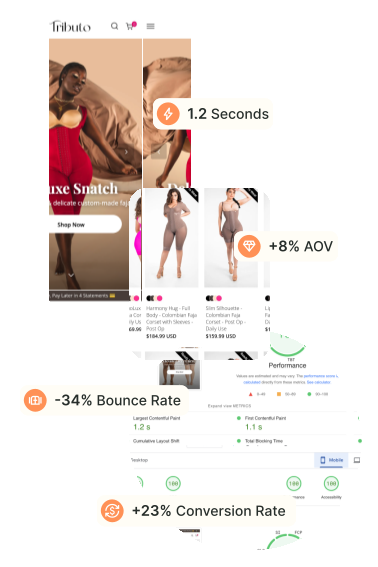
Expect a faster, more engaging site that drives real, measurable growth for your business.
Frustrated by slow load times, theme constraints, and the chaos of multiple apps that were costing them sales,
we transitioned Tributo to a custom Shopify Headless setup.
Free Assessment
south_east
Share a few details to know if we're a good fit for your business. You'll receive a custom report with growth
insights and actionable next steps.